Chang'e Program
Introduction
The Chang'e Program is China's ambitious lunar exploration initiative, named after the Chinese moon goddess Chang'e. This program signifies China's commitment to advancing its space capabilities by exploring the moon through a series of robotic missions. The initiative is not only a technological endeavor but also carries cultural significance, inspired by traditional Chinese mythology. The program involves a series of missions, each with distinct objectives, contributing to scientific understanding and demonstrating China's growing prowess in space exploration.
Background
The association of the moon with femininity in Chinese culture is reflected in the naming of China's lunar exploration program after Chang'e, the moon goddess in Chinese mythology. Chang'e is a central figure in Chinese folklore, who, after consuming an elixir of immortality, floated to the moon and became a goddess. This cultural linkage is mirrored in the program's composition, where many scientists and engineers, including numerous women, have played crucial roles. The program serves as a symbol of national pride and scientific achievement, aiming to enhance China's position in the global space exploration community.
Missions
Chang'e 1
Chang'e 1, launched in 2007, was China's first lunar orbiter. Its primary objective was to create a comprehensive three-dimensional map of the lunar surface. The mission marked China's entry into lunar exploration, successfully achieving its goals of collecting vital data about the moon's topography, mineral composition, and space environment.
Chang'e 2
Following the success of Chang'e 1, Chang'e 2 was launched in 2010 with the aim of enhancing the quality of the lunar surface mapping. It provided high-resolution images of the Sinus Iridum, a potential landing site for future missions. Chang'e 2 also went on to perform an extended mission, leaving lunar orbit to explore deeper space and conduct flybys of other celestial bodies.
Chang'e 3
Chang'e 3, launched in 2013, was a significant milestone in China's lunar exploration efforts. This mission featured a lander and a rover named Yutu, or Jade Rabbit, which conducted scientific experiments on the lunar regolith and surface structure. Despite encountering mobility issues, Yutu provided valuable data and extended the mission's scientific output.
Chang'e 4
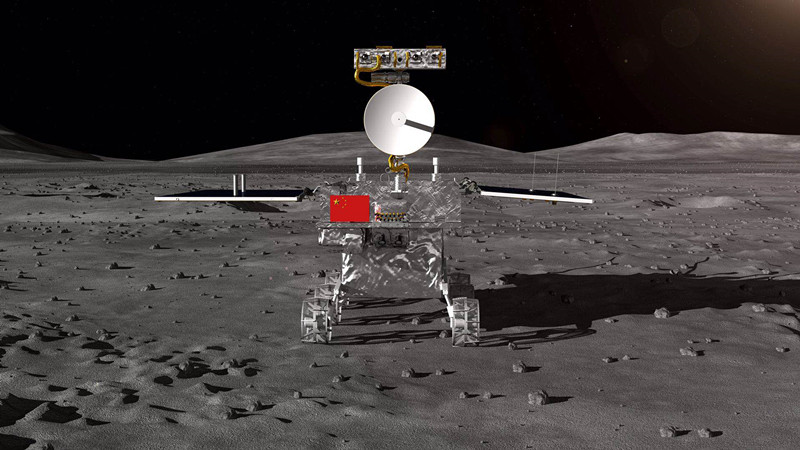
Launched in 2018, Chang'e 4 became the first mission in history to achieve a soft landing on the far side of the moon. This challenging feat required advanced communication technology and precision landing techniques. The mission included the Yutu-2 rover, which continues to explore the far side of the moon, conducting experiments and sending back unprecedented scientific data about this unexplored region.
Chang'e 5
Chang'e 5, launched in 2020, marked a new level of achievement by successfully collecting lunar samples and returning them to Earth. This was China's first sample return mission, and it demonstrated a high level of technical expertise in automated sampling and return procedures. The mission provided insights into the moon's geology and its formation history.
Chang'e 6 (Planned)
Chang'e 6 is planned as a follow-up sample return mission, aiming to collect further samples from the moon's South Pole-Aitken Basin. Scheduled for the near future, this mission intends to expand China's understanding of lunar resources and the moon's geological history, contributing to the broader goals of lunar exploration and potential human habitation.








